
 EN
EN
Understanding the Role of Public Address Systems in Emergency Evacuations
The critical function of PA systems in crisis communication
Public address systems have become essential during emergencies, functioning much like the brain of a building when people need to evacuate quickly. These systems deliver clear instructions even over background noise, helping keep crowds calm instead of panicking. When connected to smoke detectors and fire alarms, PA systems kick in automatically to tell everyone where to go or if they should stay put. According to recent studies from the Emergency Management Journal published last year, buildings equipped with voice alarms instead of just sirens saw their evacuation times drop by around 32%. Looking at how these alert systems have developed over time shows why having standard procedures matters so much. Schools, office buildings, and factories all benefit from this consistency because workers and students know exactly what to expect when alarms sound.
How emergency broadcast systems enhance situational awareness
Modern public address systems split large spaces into different sound areas so they can send specific messages where needed most, which helps keep exits from getting too crowded during emergencies. These systems work hand in hand with smoke detectors to guide people away from hazardous spots while keeping everyone calm with straightforward directions that get repeated often enough to stick. Looking at actual data from airports in 2022 shows something interesting: when terminals used these zoned messages instead of broadcasting to everyone at once, there was actually a 41 percent drop in people moving sideways through dangerous areas. The best part? Adding visual signals along with the audio makes sure everyone gets the message regardless of their hearing ability or whether English isn't their first language. This combination approach really levels the playing field for all building occupants during critical situations.
Case study: PA system effectiveness during high-rise building evacuations
In a recent 2023 fire simulation at a high-rise office building with 40 floors, workers were completely evacuated in just 17 minutes thanks to an EN54 certified public address system. That's actually 12 whole minutes quicker than regular alarm systems managed. The PA played pre-recorded messages in several languages along with real time updates from the security staff who were on site. These announcements directed people toward the specially designed stairwells and helped stop the spread of incorrect information about which exits were safe. Afterward, when they checked responses from those who took part, around 78 percent said they stuck closely to what was being told through the speakers. This shows clearly that clear spoken instructions really do help prevent people from getting stuck trying to decide what to do during emergencies.
Key Features of Effective Emergency Sound Systems: Clarity, Coverage, and Speed
Why audio clarity and speech intelligibility determine evacuation efficiency
When things go wrong during an emergency situation, poor quality audio can lead to serious problems and delays. Research from NIST back in 2023 showed something interesting about this issue. Systems that maintained a Speech Transmission Index score over 0.75 cut down on mistakes during evacuations by almost half compared to those with worse performance. The human brain processes verbal information much quicker when it falls within certain frequency ranges, specifically around 500 to 4000 Hz. This becomes really important under pressure situations where people might be dealing with rising stress hormones. Studies published in the Occupational Safety Journal noted these hormone levels can jump as much as two thirds when individuals encounter smoke or experience panic attacks.
Maximizing sound coverage with strategic tweeter placement
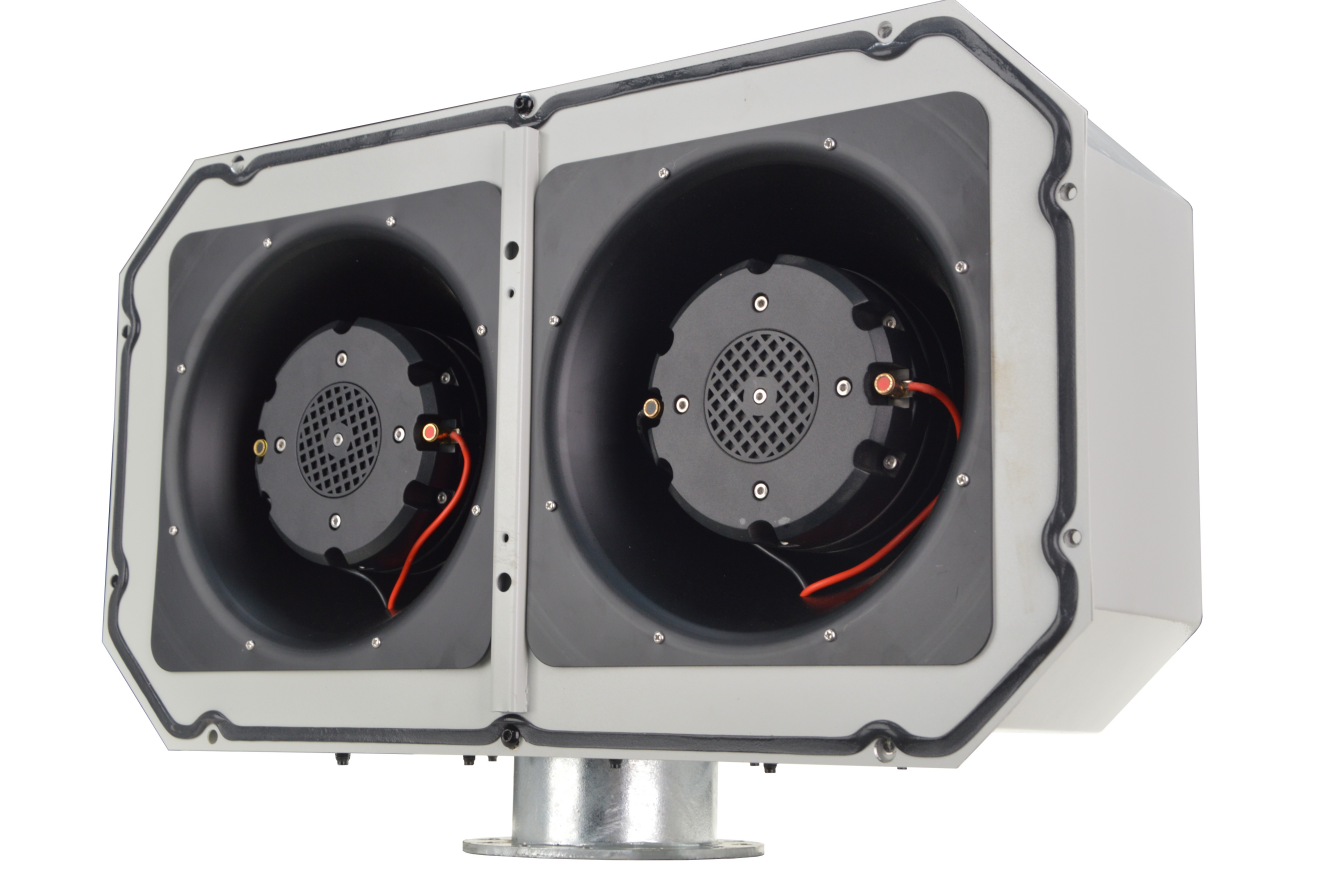
High-frequency drivers (tweeters) help overcome voice masking in large spaces when angled at 15°–30° toward reflective surfaces. Vertical arrays spaced every 8 meters create overlapping coverage zones, maintaining 65dB clarity across 100m² areas—a method shown to improve wayfinding accuracy by 33% during multi-level evacuations.
The importance of rapid activation in emergency PA systems
Fire-safe installations require activation within 3 seconds via dedicated power circuits—86% faster than shared electrical designs. This speed is vital: Emergency Management Quarterly data shows 73% of evacuation route decisions occur within the first 90 seconds after an alarm.
Data insight: NIST findings on response time reduction using high-clarity systems
Recent NIST simulations show EN54-certified voice alarms reduce occupant evacuation delays by 31% through optimized frequency response. Their 2023 stress tests confirmed metal dome tweeters maintained an STI rating of 0.82 even under 110dB of background noise.
EN54 Certification and Compliance with International Fire Safety Standards
What EN54 certification means for fire safety audio systems
The EN54 certification is what makes sure emergency sound systems actually work when lives are on the line. Looking specifically at Part 24, this part deals with loudspeakers and sets some pretty tough requirements. These speakers need to keep going for more than half an hour even when temperatures hit 85 degrees Celsius, all while still letting people understand what's being said - which matters a lot during building fires where communication can mean survival. When systems get certified, they go through some serious tests too. Think smoke exposure, super humid environments lasting days straight, and actual physical shocks thrown at them. The whole point is so important messages stay clear even as conditions worsen around them. Recent reports from 2024 show something interesting about these certified systems. Their tweeters handle vibrations better than most, staying within just +/-3 dB of their normal range even when subjected to forces over 8g. That means clearer sound transmission during events like quakes or blasts where regular equipment would start distorting badly.
Comparing EN54-compliant speakers with non-certified alternatives
| EN54-Certified | Non-Certified | |
|---|---|---|
| Failure rate in fire tests | ≈2% (ISO 7240) | 38% (UL 2023) |
| Speech Intelligibility (STI) | ≥0.65 | 0.42 avg. |
| Warranty coverage | 10 years | 2–3 years |
Non-certified systems are prone to signal degradation from melted diaphragms or corroded voice coils. UL studies reveal up to 9-second message delays in high-heat scenarios—potentially fatal during evacuations.
Global regulatory alignment: From EU directives to NFPA guidelines
EN54 aligns with NFPA 72’s Chapter 18 on voice intelligibility and Australia’s AS1670.4, which mandates minimum sound pressure levels of 75dB. While regional codes vary, all require third-party certification for public address components in buildings occupied by more than 100 people.
Integrating Emergency PA Systems with Fire Alarms and Smart Building Infrastructure
Synchronizing Emergency Sound Systems with Smoke Detectors and Alarm Triggers
Getting people out safely during emergencies depends heavily on how well public address systems work together with fire detection equipment. When these systems are properly linked, the PA system kicks into action right away when smoke detectors go off or alarms are triggered, cutting out any lag time caused by someone needing to press buttons manually. The coordination between these systems allows for several important responses at once like opening emergency doors automatically, shutting down air conditioning units to stop smoke from spreading throughout the building, and turning on flashing lights so those who can't hear still get warnings. According to data from NFPA 2025, structures where these safety features are combined see evacuation times drop anywhere from 22 to 35 percent faster than buildings relying on separate systems for alerts and communication.
Voice Alarm Integration: Automating Evacuation Instructions via AI Prompts
Voice alarm systems powered by artificial intelligence look at live sensor information like how thick the smoke gets, where heat builds up, and how people are moving around to create evacuation messages that actually make sense for the situation. When there's a blockage somewhere, these smart systems know to tell folks to take different routes, and they'll send warnings first to places where danger is highest. According to research published in the latest Fire Safety Technology Report from 2024, buildings equipped with AI voice guidance see about 47% better follow through on evacuation orders compared to traditional alarms. The reason? People tend to listen more when instructions are delivered calmly and specifically tailored to their immediate surroundings rather than generic blaring sounds.
Real World Example: Smart Building PA-Fire Alarm Coordination in Airports
Airports exemplify the life-saving potential of integrated emergency systems. At Singapore Changi Airport, a centralized smart platform links 8,200 smoke detectors with 1,450 PA speakers and digital signage. During a 2023 fuel spill incident, the system:
- Triggered multilingual evacuation alerts within 4 seconds of detection
- Adjusted exit routing using real-time thermal imaging
- Coordinated with air traffic control to delay departures
As a result, 12,800 people were safely evacuated with no casualties demonstrating the operational superiority of unified emergency infrastructure.
Table of Contents
- Understanding the Role of Public Address Systems in Emergency Evacuations
- Key Features of Effective Emergency Sound Systems: Clarity, Coverage, and Speed
- EN54 Certification and Compliance with International Fire Safety Standards
- Integrating Emergency PA Systems with Fire Alarms and Smart Building Infrastructure