
 EN
EN
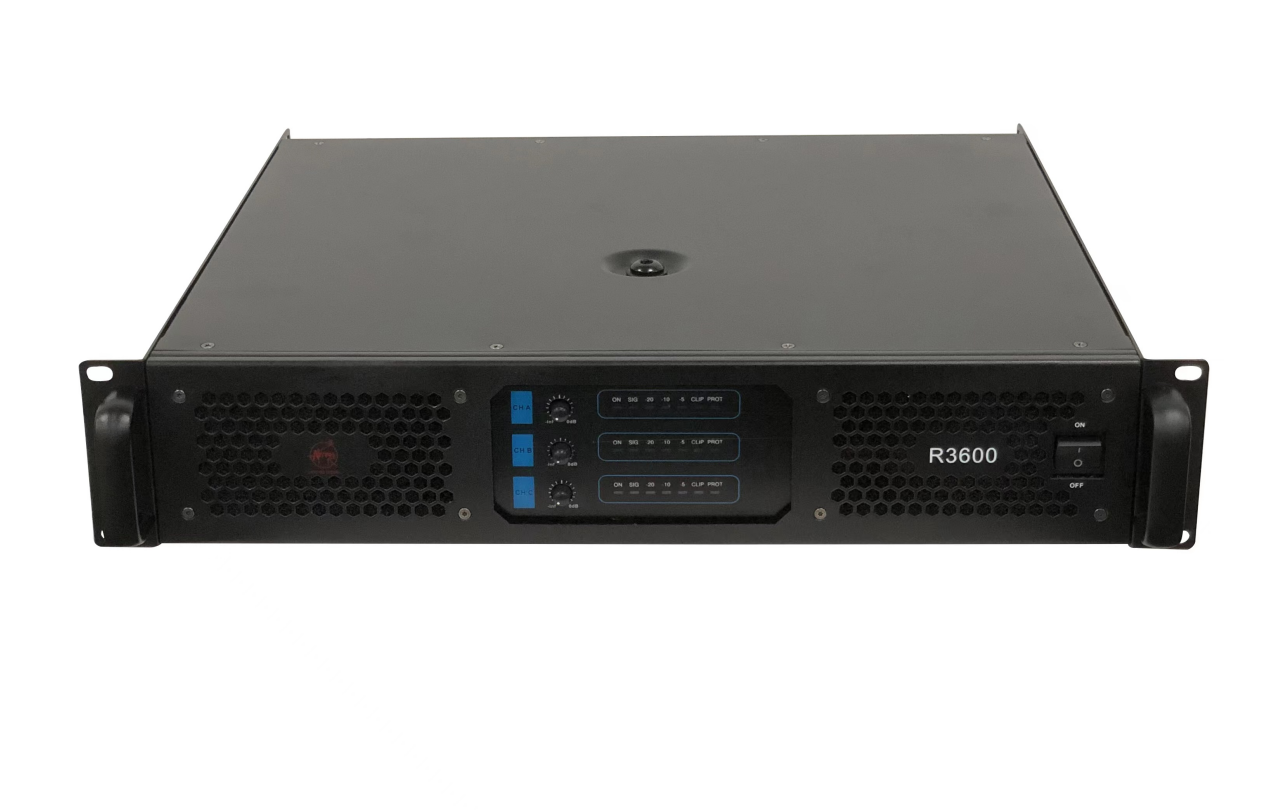
What Is a Power Amplifier? Core Principles and Key Specifications
Defining Power Amplifier Function and Role in Signal Chains
Power amplifiers, or PAs as they're often called, take weak electrical signals and crank them up to much stronger levels needed to drive things like speakers, antennas, and even motors. These components sit right at the end of most signal processing chains because they need to maintain signal quality while still pushing enough current and voltage through whatever resistance exists in the system. Small signal amps focus mainly on boosting voltage, but power amplifiers are built differently. They're designed specifically for getting maximum power out there, which is why we find them everywhere from home stereos to radio frequency equipment used by broadcasters and throughout various industrial settings where precise motor control matters.
Essential Specifications: Output Power, Efficiency, THD, and Bandwidth
Four interdependent metrics define PA performance:
- Output Power: Measured in watts (W), it determines load-driving capability and must align with both peak demand and long-term thermal limits.
- Efficiency (η): Defined as η = PAC/PDC × 100%, efficiency directly governs heat generation and power supply sizing—especially critical in energy-constrained or thermally isolated deployments.
- THD (Total Harmonic Distortion): A measure of signal fidelity; values below 0.1% are typical for high-fidelity audio, while <0.5% remains acceptable for many industrial and broadcast applications.
- Bandwidth: The frequency range over which gain remains within ±3 dB of its nominal value—20 Hz–20 kHz for audio, but extending to GHz ranges in RF designs.
| Specification | Impact | Typical Target Range |
|---|---|---|
| Output Power | Load compatibility & system headroom | 10W–1kW+ |
| Efficiency | Thermal design & energy cost | Class D: >90%; Class AB: 60–70% |
| THD | Perceived signal clarity & compliance with fidelity standards | <0.5% (audio); <5% acceptable in some RF/industrial contexts) |
| Bandwidth | Frequency response fidelity | 20Hz–20kHz (audio); MHz–GHz (RF) |
Balancing these parameters is non-negotiable: optimizing for one often compromises another. For instance, Class D architectures achieve exceptional efficiency (>90%) but introduce switching noise that demands careful EMI filtering—unlike linear Class AB, which delivers lower THD at the cost of higher thermal load.
Types of Power Amplifiers: Class A, B, AB, D, and Beyond
Analog vs. Switching Architectures: Trade-offs in Linearity, Heat, and Size
The analog amplifier classes like A, B, and AB work by keeping transistors operating in a linear fashion so they maintain the shape of the original audio waveforms. Premium audio gear can get total harmonic distortion down to around 0.05%, but this comes at a cost since these amps are really inefficient. Take Class A for instance it keeps running full current all the time no matter what the signal level is doing. That means real world efficiency tops out around 25% max, which explains why these amps need those massive heat sinks to stay cool. Switching amplifiers tell a different story though. These include Classes D, E, and F and they work differently by turning transistors on and off very quickly using techniques like pulse width or frequency modulation. This approach cuts down on power loss significantly, allowing efficiencies over 90% in practice. Plus, the circuit boards take up about half the space compared to similar Class AB designs. There's a catch though. Because these switching designs aren't perfectly linear, they create some noise that needs filtering out. And there's also the issue of electromagnetic interference that pops up during system design if we're not careful from the start.
Application-Specific Suitability (e.g., Audio, RF, Industrial)
Class A amplifiers still set the standard in premium audio equipment when pure sound quality matters more than power consumption. Then there's Class AB which finds a sweet spot between performance and efficiency. These amps typically deliver total harmonic distortion below 0.1% while operating at around 60 to 70% efficiency. That makes them pretty popular across different applications like car audio systems, professional studio monitoring setups, and even in some industrial control systems such as PLC output stages. Moving on to Class C designs, they shine in situations where maximum efficiency is needed alongside their ability to pick out specific frequency ranges. We see these mostly in radio frequency transmitters that work at fixed frequencies and also in broadcast exciter equipment. Looking at contemporary amplifier design, switching topologies have taken over in most scalable systems today because...
- Class D powers portable audio, battery-operated test equipment, and distributed sound systems;
- Class E enables efficient wireless power transfer and resonant motor drives;
-
Class F supports wideband 5G base station power stages, particularly when paired with digital pre-distortion (DPD).
Industrial designers increasingly standardize on Class D—not only for its 70% average power savings over Class AB, but also because its predictable thermal profile simplifies enclosure design and reduces cooling infrastructure costs.
How to Select the Right Power Amplifier for Your B2B Application
Matching Load Impedance, Voltage Rails, and Thermal Management Requirements
Selecting a power amplifier hinges on three system-level constraints:
- Load impedance matching: Mismatches between amplifier output impedance and connected load (e.g., 4Ω speaker, 50Ω antenna) cause reflected power, reducing delivered power by up to 15% and potentially triggering protection circuits or damaging output stages. Always verify Zout/Zload ratios per manufacturer datasheets.
- Voltage rail compatibility: Industrial automation may require dual ±48V rails for high-slew-rate control loops, whereas embedded IoT gateways often operate from single 12V or 24V supplies. Ensure the PA’s operating voltage range includes your supply’s worst-case tolerance (±10% typical).
- Thermal management: Passive cooling suffices for <50W Class AB amplifiers in climate-controlled environments, but above 100W—or in ambient temperatures exceeding 55°C—active solutions (forced air, vapor chamber, or liquid-cooled heatsinks) become essential. Remember: semiconductor lifetime halves with every 10°C rise in junction temperature, making thermal derating curves a mandatory part of selection.
Evaluating Certifications, Reliability Metrics, and OEM Integration Support
Technical fit alone is insufficient for B2B deployments. Prioritize units validated against industry benchmarks:
- ISO 9001-certified manufacturing confirms consistent quality control processes;
- MTBF ≥100,000 hours, verified via accelerated life testing (e.g., JEDEC JESD22-A108), signals field-proven reliability;
-
FCC Part 15 / CE EN 55032 compliance ensures EMC robustness in mixed-signal industrial cabinets.
Equally important is integration readiness: request documented APIs for software-configurable gain, offset, or protection thresholds; mechanical CAD models for precise chassis layout; and surge-rated designs (e.g., IEC 61000-4-5 Level 4) backed by warranty coverage for transient events. Manufacturers offering application-specific reference designs—validated for thermal, EMI, and signal integrity—reduce time-to-market by up to 30% compared to generic evaluation boards.
Maximizing Power Amplifier Performance in Real-World Deployments
Getting power amplifiers to perform well beyond what's listed in their specs requires dealing with three main issues on site: heat problems, changing loads, and complicated modulation schemes. When running continuously at more than 50 watts without proper cooling, things start to go wrong fast. The system overheats, efficiency drops around 15 to 20 percent, and parameters begin shifting unpredictably. To keep things stable, engineers typically install forced air or liquid cooled heatsinks that hold junction temps under 110 degrees Celsius. This helps maintain consistent gain levels and reduces distortion as components age. In radio frequency work and industrial applications, load impedance keeps changing because cables stretch, connectors get worn down, or antennas lose tune. These fluctuations can create voltage standing wave ratio spikes over 3 to 1, bouncing back more than half the power sent through. That's why smart folks use automatic impedance matching systems or broadband transformers to protect those expensive output transistors from damage. For signals with wide bandwidth like OFDM used in 5G networks, special designs such as Doherty amplifiers achieve impressive efficiencies around 58%, though they need fancy digital pre-distortion tech to cut down on third order intermodulation distortion by about 20 to 30 decibels. And don't forget the sensors either. Modern amps come equipped with temperature, current, and voltage monitors connected to edge computing platforms. This setup allows for predictive maintenance alerts before failures happen, which cuts unexpected shutdowns by roughly 30% in critical systems where reliability matters most.