
 EN
EN
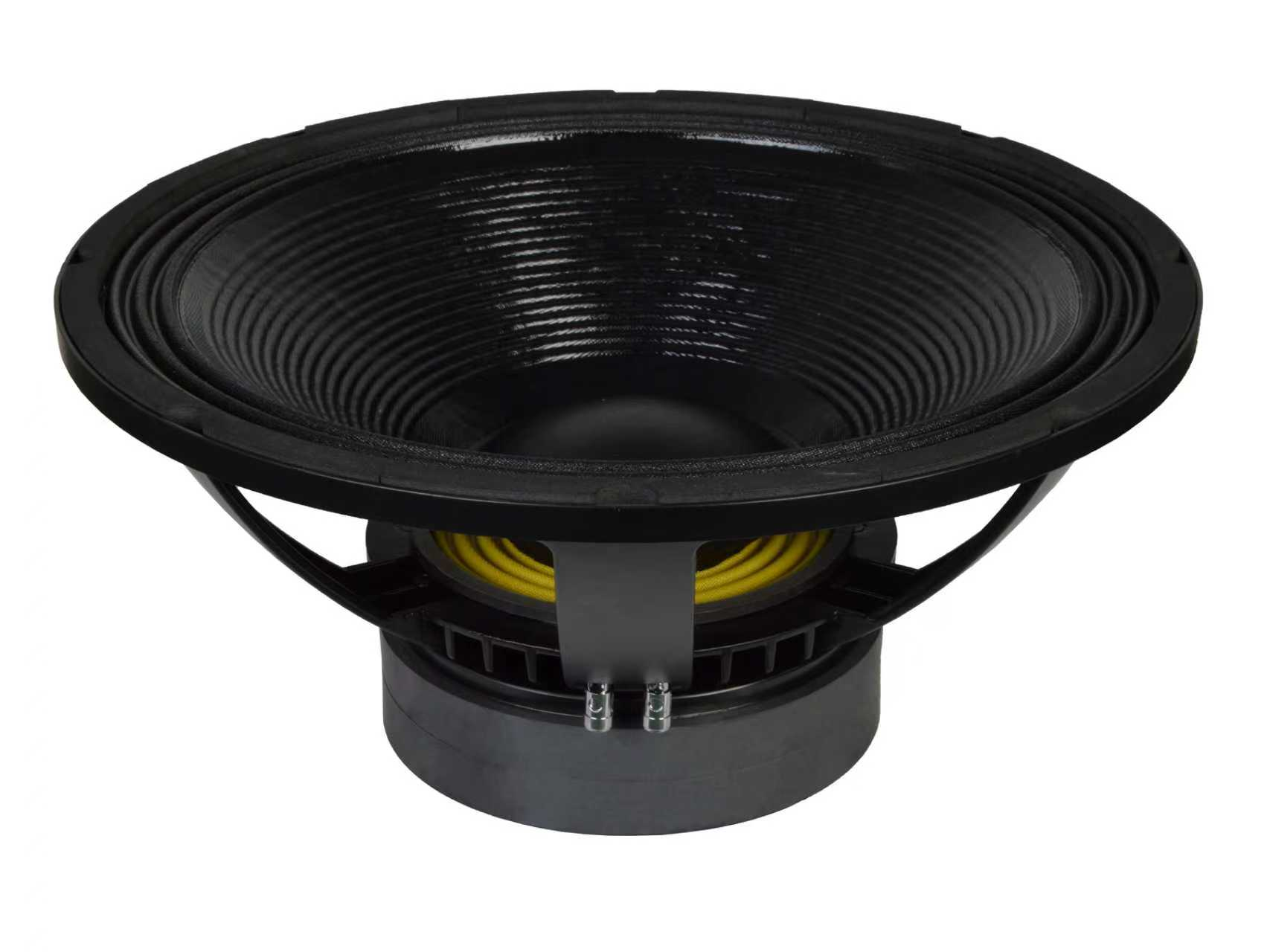
Understanding the Core Function of a Woofer in Audio Reproduction
Definition and Role of a Woofer in Sound Systems
Woofer speakers are basically big speaker components made specifically for those really low sounds we hear in music and movies, usually covering frequencies from about 20 Hz all the way up to around 200 Hz. These form what most people would call the bass part of any audio experience. While regular speakers focus on midrange or treble sounds, woofers have much bigger cones, often measuring between 8 and 12 inches across, plus stronger suspension materials that let them push air effectively at those long wavelength frequencies. When properly set up, good woofers can produce those powerful vibrations felt physically during action movie explosions, deep sub-bass drops in electronic tracks, and even the rich bottom end of acoustic drum kits. For anyone setting up a home theater system or serious hi-fi setup, getting quality woofers means they'll get that full-bodied sound sensation without messing up the clarity of other speakers handling vocals and instrument details.
How Woofers Produce Low Frequency Sounds: The Science of Bass
The way woofer diaphragms produce bass is all about those electromagnetic forces working together just right. When music gets louder, the electrical signal goes through this voice coil thing made of copper wire sitting inside a magnetic gap. What happens next? The electromagnetic field created pushes the coil back and forth like a tiny motor. This movement makes the cone shaped part of the speaker move too, squeezing and stretching the air around it to form those sound waves we hear as bass. Big woofers are better for really low sounds below 80 Hz since they have more surface area to push air around with each movement. That's why people who care about deep bass often go for larger speakers. Getting accurate sound means keeping the diaphragm moving straight without wobbling, which is why manufacturers use tough materials such as polypropylene or aluminum for the cones. They also incorporate these spider like suspension systems behind the scenes to stop any sideways drifting that would mess up the sound quality.
Woofer vs. Full-Range Speaker: Design and Performance Differences
Full range speakers try to handle everything from 100 Hz all the way up to 20 kHz using just one driver, but this comes at a cost for deep bass and clear sound quality compared to what dedicated woofers can deliver. Research published last year by audio engineers showed that systems with separate woofers had about 40 percent less distortion at 50 Hz levels than those relying on full range drivers alone. The reason? Woofers are built differently. They focus on moving air (that's called excursion) rather than spreading high frequencies around the room. Manufacturers make them with sturdier materials like thicker cones and heavier voice coils so they can handle those powerful low frequency vibrations without breaking down. When listening to music, this means voices and instruments stay clean and distinct instead of getting lost in muddy bass when full range speakers try to do both jobs at once.
Working Principles of Powered and Passive Woofers in Hi-Fi Setups
Active woofers come with their own built in amps and crossover circuits which makes them easier to set up since they filter out those pesky high frequency sounds right at the source. Take a typical 100 watt powered woofer for instance it often has digital signal processing that lets the amp tweak what comes out depending on how the room sounds. Passive woofers need separate amplifiers though and getting the impedance just right with an AV receiver can be tricky work. Some serious audio fans still prefer passive setups because they allow more tweaking options but most people find that active ones handle phase problems better and deliver cleaner power overall. That explains why nearly four out of five home theaters installed last year went with active subs according to numbers from CEDIA's 2023 report. No matter if they're active or passive these speakers all need solid enclosures either sealed boxes or ones with ports to stop those annoying back waves from canceling out the front sound.
Why Accurate Bass Reproduction Enhances Audio Fidelity
The impact of bass on immersion, clarity, and spatial depth
Getting the bass right really matters for creating those immersive audio experiences because it gives soundscapes that physical feel people can actually sense. Studies indicate that when we're dealing with bass frequencies from around 20 to 80 Hz, they produce vibrations that make viewers and listeners connect emotionally with what they hear in movies and music tracks. When low frequencies are properly handled, something interesting happens to the midrange sounds too. The so called masking effect gets reduced, which means those overpowering bass tones don't cover up important vocal parts or instrument details anymore. Audio engineers have been talking about this phenomenon for years now, emphasizing how crucial it is for good sound quality across different applications.
Enhancing dynamics and realism with precise low-frequency response
High-quality woofers reproduce transient bass attacks in drum sequences and orchestral crescendos with 5ms response time, preserving the natural decay of acoustic instruments. This temporal precision prevents "smearing" that occurs when subpar drivers compress dynamic contrasts, turning nuanced performances into flat reproductions.
Sub-bass in electronic and acoustic music: Critical for authenticity
While electronic genres demand <30 Hz reproduction for synth textures, acoustic recordings rely on accurate 40–60 Hz response to capture upright bass resonance and piano pedal effects. Professional monitoring systems reveal 78% of jazz and classical recordings contain sub-bass information most consumer systems fail to resolve.
How poor woofer performance distorts audio fidelity
Underpowered or mismatched woofers create frequency nulls exceeding ±12 dB in typical listening environments, causing basslines to disappear in certain room positions. Distortion rates above 3% at reference volumes introduce harmonic overtones that clash with main speakers' midrange output, degrading overall tonality.
Integrating a Woofer Seamlessly with Main Speakers
Matching Subwoofers with Satellite or Floor-Standing Speakers
When picking out a woofer speaker to go with what's already in your setup, it all begins by knowing the different kinds of speakers available. Big floor standing ones generally do a good job with mid bass sounds, so they leave the really deep stuff below 40Hz for dedicated subwoofers to handle. Compact satellite speakers are another story though - they actually benefit from more extensive low frequency coverage since their smaller size limits their bass capabilities. Getting the sensitivity ratings right matters too, aiming for around +/-3dB difference between components. Impedance matching is important as well, most systems work best when everything runs at either 4 ohms or 8 ohms. Getting these basics sorted helps avoid situations where one part screams while others whisper, or worse yet, damages amplifiers through mismatched loads.
Crossover Settings and Calibration for Smooth Frequency Blending
Modern AV receivers with auto-calibration tools like Audyssey simplify crossover optimization. Set crossover points 10–15 Hz above your main speakers' lowest usable frequency (e.g., 80 Hz for satellites rated down to 65 Hz). This creates a 15 Hz overlap for seamless transitions—woofers handle 15–80 Hz, mains manage 65 Hz and above.
Phase Alignment and Timing: Avoiding Bass Cancellation Issues
Phase mismatches cause up to 12 dB bass dips at listening positions. Use receiver-delay adjustments (0–180° phase control) and measure with smartphone SPL meters: play 60 Hz test tones, then invert sub polarity to identify cancellation spots.
Powered vs. Passive Woofers: Which Integrates More Easily?
Powered woofers (built-in amps) simplify integration through line-level inputs and dedicated crossover controls, while passive models require external amplification matching. However, passive designs allow centralized amp racks in custom installations—63% of surveyed integrators (CEDIA 2022) use both types based on room size and speaker topology.
Optimizing Woofer Placement for Ideal Room Acoustics
Finding the Sweet Spot: Best Practices for Subwoofer Positioning
Finding the sweet spot in your room takes some trial and error with what's called the subwoofer crawl method. Here's how it works: put the subwoofer where you normally sit when listening to music or movies, blast some tunes with lots of bass, then walk around the edges of the room looking for spots where the low end sounds most balanced and clear. This actually matters because every space has its own acoustic quirks that computer models just can't capture accurately. Corners might seem tempting for extra bass punch, but generally speaking, keeping subs about a foot or two away from walls gives better overall performance while reducing those annoying boomy distortions that ruin the experience.
How Room Size, Shape, and Walls Affect Bass Response
The size and shape of a room really matters when it comes to how clear the bass sounds. Square shaped rooms tend to make those annoying standing waves worse, which leads to spots where bass is either way too loud or completely missing. Take a standard 12 by 12 foot room for instance – it can boost around 40 Hz frequencies by about six decibels more than what happens in rectangular spaces. Rooms with slanted ceilings or walls that aren't perfectly straight help scatter these problematic waves, making the overall sound much more balanced throughout the space. Concrete floors are particularly bad because they bounce sound all over the place, whereas something like thick carpeting or specially designed bass traps will soak up that extra energy and keep things from getting out of hand acoustically speaking.
Using Dual or Multiple Woofers to Achieve Even Bass Distribution
Putting two woofers facing each other cuts down on those pesky bass inconsistencies by around 40%, according to research from Harman International back in 2021. When dealing with bigger spaces, positioning four speakers at the middle of walls works wonders for getting rid of those annoying standing waves that plague so many listening areas. A lot of audiophiles who care more about music quality than just blasting movies tend to find that having two 8 inch woofers beats the heck out of one big 12 inch speaker. The smaller drivers just seem to handle bass better, filling the room evenly without that boomy resonance people hate so much.
Room Correction Tools and Measurement Microphones for Fine-Tuning
Systems that auto calibrate such as Dirac Live or Audyssey MultEQ XT32 basically look for holes in the frequency response curve and then tweak the crossover points and fix phase issues all on their own. To get good results, folks usually stick measurement mics right where ears would be during normal listening sessions so they can gather accurate readings. When it comes down to really important listening situations though, many audiophiles still prefer getting their hands dirty with parametric EQ adjustments, making small changes around +/- 3 dB here and there until everything sounds just right together with the main speaker setup.
Frequently Asked Questions
What is the role of a woofer in a sound system?
A woofer is designed to produce low-frequency sounds, typically within the range of 20 Hz to 200 Hz, forming the bass component of the audio experience.
How do woofers generate bass?
Woofers generate bass through electromagnetic forces, using a voice coil in a magnetic gap to move the speaker cone, creating sound waves.
What is the difference between woofers and full-range speakers?
Woofers specialize in low-frequency sounds, offering less distortion in bass reproduction compared to full-range speakers, which handle both high and low frequencies.
How do powered and passive woofers differ?
Powered woofers have built-in amps and crossovers for easy setup, while passive woofers require external amplification, offering more tweaking options.
Why is accurate bass reproduction important?
Accurate bass enhances immersion, clarity, and spatial depth, allowing for dynamic and realistic audio experiences.
How can woofer placement affect audio quality?
Woofer placement impacts bass response due to room acoustics, with methods like the subwoofer crawl helping to find the optimal spot for balanced sound.