
 EN
EN
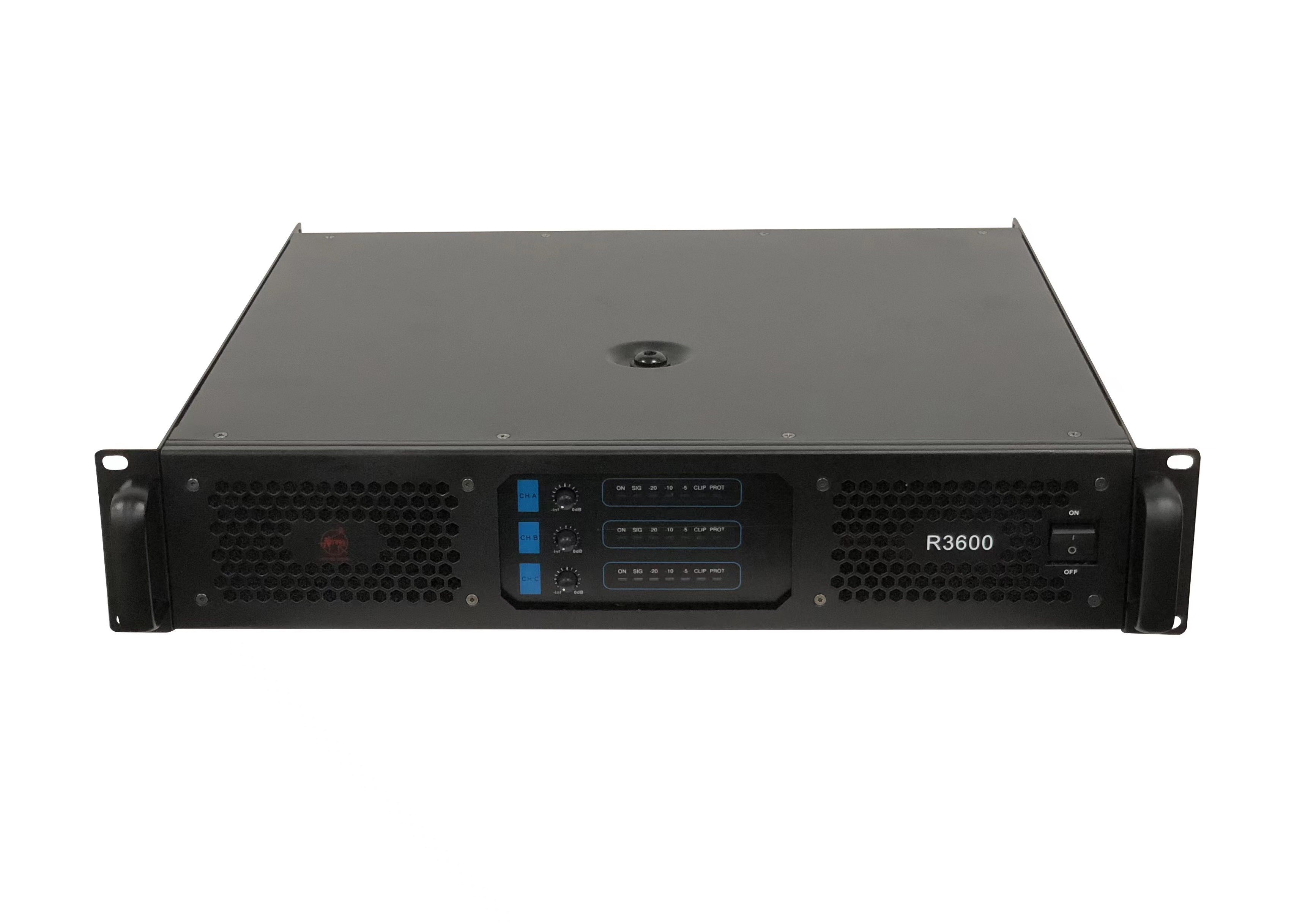
Understanding Amplifier Classes and Their Impact on Performance
Class A, Class AB, and Class D: Core Differences in Power Amplifier Design
Amplifier classes form the backbone of professional audio systems, each offering different tradeoffs between power efficiency and sound quality. Class A amps are known for their incredible sound reproduction capabilities since they work with analog signals throughout. However, these amps only manage around 20% efficiency according to research from Ponemon in 2023, which makes them pretty much useless for live tour setups where power consumption matters a lot. Then there's Class AB that sits somewhere in between. These amps get about half to three quarters efficiency while keeping distortion low thanks to their transistor pairing system. For modern applications though, Class D amplifiers have taken center stage. They employ pulse width modulation techniques to reach nearly 90% efficiency rates without sacrificing audio quality. This major advancement was made possible by gallium nitride semiconductors, revolutionizing what's possible in compact audio equipment design.
| Class | Efficiency | Fidelity | Heat Output | Typical Use Case |
|---|---|---|---|---|
| A | 20% | Premium | Extreme | Studio mastering |
| AB | 65% | Balanced | Moderate | Live sound mains |
| D | 90% | High* | Minimal | Portable PA systems |
When using advanced DSP correction
Efficiency vs. Fidelity: Comparing Class-D and Class-AB for Professional Use
According to the ProSound Survey from last year, around three quarters of sound engineers actually care more about having enough headroom than going for maximum efficiency when setting up their systems. The old school Class AB amps deliver power in a straight line way that just works great for voices that jump around dynamically. Meanwhile, Class D gear is much lighter on the wallet and easier to fly up there in those big speaker arrays we see at concerts nowadays. Back in the day though, people were pretty hesitant about adopting Class D technology because of those pesky high frequency phase problems. About 42% of folks held back from switching over back then. But things have changed quite a bit since then. Premium power amps now come with this fancy FIR filtering tech that basically fixed all those annoying issues once and for all.
Best Applications by Setting: Live Sound, Installations, and Conference Systems
- Live Sound: Class AB dominates front-of-house stacks for transient response
- Installed AV: Class D claims 61% market share in hospitality systems due to energy savings
- Conference Rooms: Hybrid amplifiers with auto-class switching adapt to speech vs. music content
System designers increasingly deploy dual-class amplifiers that toggle between AB and D modes, combining musicality with thermal stability under variable loads.
Matching Power Output and Channel Configuration to Your Speaker System
Selecting the Right Channel Setup: 2-Channel, 4-Channel, and Bridged Mode Options
When it comes to pro audio gear, amps come with all sorts of configuration options that make them work better with different speaker setups. Most folks start with a 2 channel model for powering stereo speakers in smaller spaces like clubs or restaurants. But when things get bigger, 4 channel units become really useful because they let technicians tweak each satellite speaker and subwoofer separately. There's also this thing called bridged mode where two channels merge into one big powerhouse circuit. This can boost output by around 75%, which makes a huge difference for those massive line arrays or stage monitors. Take a typical 1500 watt amp running in bridge mode for instance. It can push nearly 1050 watts RMS through an 8 ohm subwoofer. That kind of juice is exactly what live sound engineers need for those deep bass bins during concerts or when setting up sound systems in large auditoriums.
Power-to-Speaker Ratio and Headroom for Dynamic Audio Peaks
When matching amplifiers to speakers, look for one where the continuous RMS output lands somewhere between 1.5 and 2 times what the speaker can handle. This extra capacity helps avoid clipping when those sudden loud moments hit, something that actually causes about 8 out of 10 speaker failures during live performances. Take a 300 watt passive speaker for example. Pairing it with an amp that delivers around 450 to 600 watts gives plenty of headroom for dynamics without pushing the system into dangerous territory. Most professionals find that running gear at or below 70% of its maximum power cuts down on distortion significantly, maybe even cutting it by roughly half compared to systems pushed right to their limits all the time.
Ensuring Compatibility: Amplifier RMS Ratings and Speaker Power Handling
It's important to check how much power your amplifier delivers (usually measured at around 1kHz with very low distortion) against what the speakers can handle continuously. Take for example a 4 ohm speaker that needs about 200 watts RMS - it works fine with an amp channel rated for 300 watts at 4 ohms. But watch out when connecting that same amplifier to a smaller 100 watt 8 ohm speaker as there's a good chance of causing damage over time. When setting up multiple zones, make sure all those speakers together don't push past 80 percent of what the amplifier is stable across different impedances. Most manufacturers design their equipment with some headroom built in, but staying within these limits keeps things running smoothly long term.
Impedance Stability and System Load Management for Reliable Operation
Proper Impedance Matching Between Power Amplifier and Speakers
Getting the right match between a power amplifier's output impedance and the speakers it drives is absolutely essential if we want good results in professional audio settings. When there's a mismatch exceeding about 20%, things start going wrong pretty quickly. The power transfer becomes inefficient, which means components run hotter, produce distorted sound, and sometimes fail completely. Most pro grade amplifiers are designed to work best when paired with speakers rated at 4 to 8 ohms. What happens when someone tries something different? Like connecting a 2 ohm speaker system to an amplifier rated for 4 ohms? That forces all those parts to do more work than they were built for. Recent industry data shows this kind of mistake accounts for around two thirds of all amplifier failures seen on tour rigs these days. Before hooking anything up, double check what impedance rating each speaker actually has. For unusual configurations where standard matching isn't possible, consider investing in proper impedance matching transformers to protect equipment without sacrificing sound quality.
Managing Load in Multi-Zone Setups for Consistent Performance
When setting up multi zone systems for places like conference halls or sports arenas, it's essential to keep track of how much load each area is drawing to ensure consistent sound quality throughout different speaker setups. The equipment needs to handle both standard 70V and 100V distributed audio lines alongside those lower impedance zones too. That means looking for amplifiers that can switch between voltages seamlessly and provide instant feedback on what's happening with the electrical load. Modern load balancing tech actually cuts down on voltage drops by around 40 percent when things get busy in these changing environments. For anyone specing out their audio gear, make sure the amps selected include features such as:
- Thermal sensors to detect impedance drops in high-demand zones
- Independent channel controls for adjusting per-zone gain
- Bridging capabilities to combine channels for heavy loads
This approach minimizes “impedance wars” between zones while preserving headroom for transient peaks.
Thermal Management and Built-in Protection for Long-Term Durability
Professional power amplifiers demand robust thermal solutions and advanced protection systems to withstand continuous operation. As amplifiers convert up to 30% of electrical energy into heat during use (Audio Engineering Society 2023), managing this thermal load is critical for longevity.
Cooling Technologies: Heat Sinks, Fans, and Passive Cooling in Power Amplifiers
Modern amplifiers employ three primary cooling strategies:
- Heat sink arrays using aluminum or copper to dissipate heat from transistors
- Forced-air cooling with variable-speed fans that adjust to workload
- Passive designs relying on convection, ideal for installations requiring silent operation
Research shows active cooling systems extend component lifespans by up to 40% compared to passive-only solutions in high-demand environments. Optimized heat sink geometries reduce peak temperatures by 18°C in rack-mounted amplifiers (2023 thermal management study).
Essential Protection Features: Thermal, Short-Circuit, DC, and Overvoltage Safeguards
Top-tier amplifiers incorporate four critical protection circuits:
| Protection Type | Function | Activation Threshold |
|---|---|---|
| Thermal | Shuts down output when heatsink exceeds 85°C | 85°C ±2°C |
| Short-Circuit | Limits current during speaker wire faults | >0.5Ω impedance drop |
| DC Offset | Blocks dangerous DC voltage to speakers | >±2V DC detection |
| Overvoltage | Protects against power surges | >135V AC input |
These systems prevent 89% of amplifier failures in professional touring systems according to the 2024 Pro Audio Maintenance Report.
How Protection Circuits Prevent Damage During Clipping and Fault Conditions
Signal clipping happens when an amp tries to push more power than it can handle, and that's when protection circuits kick in with current limiting features while keeping the load impedance stable. These circuits work on two fronts at once actually stopping speakers from getting damaged by those nasty harmonic distortions and preventing amps from overheating and failing completely. The newer models out there are pretty smart too, using prediction software that triggers safety mechanisms about 15 milliseconds quicker compared to older systems that relied solely on voltage thresholds for activation.
Modern Connectivity and Integration with Digital Audio Networks
Input/Output Options: XLR, Speakon, Dante, and Network Connectivity (Ethernet, Wi-Fi)
Today's professional power amps need all sorts of connections to keep up with how audio systems are changing. The old reliable XLR inputs still matter a lot when working with analog signals, and most manufacturers stick with Speakon connectors for those big speaker outputs that handle serious wattage. When it comes to digital stuff, protocols such as Dante have become pretty standard across the industry. These allow multiple channels of audio to travel through regular Ethernet cables without losing quality, and they cut down on lag time to under 2 milliseconds according to recent tests from ProSoundWeb. Some newer hybrid designs throw in Wi-Fi or Bluetooth capabilities too, which makes setting things up much easier in places like conference centers where running cables everywhere is just not practical.
Networked Audio: Daisy-Chaining and Remote Control in Large-Scale Deployments
The latest networking tech makes it possible to chain together as many as 150 amplifiers using standard Ethernet connections, which really helps simplify control systems in big places like sports arenas or venues with multiple zones. Modern setups come equipped with backup signal routes and monitoring tools that keep everything running even when things get busy at important events. Failover happens super fast too, usually under 50 milliseconds so nobody notices any interruptions in the audio. According to research from the Audio Engineering Society back in 2023, this kind of system cuts down on all those cables by about 80% compared to old fashioned analog setups where each device needed its own connection. Plus, cloud based control panels let technicians tweak volume levels on the fly across different locations without having to run around physically adjusting equipment.
Onboard DSP and Signal Processing: EQ, Limiting, and Preset Management
DSP technology built right into modern amplifiers means no need for separate processors anymore. These amps come packed with 48-bit equalization filters, dynamic limiters, and crossover controls all integrated inside. The preset options are pretty handy too. There are specific settings for different spaces like concert halls, churches, or school auditoriums. A recent study showed most sound techs save around two extra hours on each installation when they use these pre-set configurations from the factory. Thermal compensation features are also worth considering. This tech adjusts the audio response based on room temperature changes, so the sound stays consistent even when conditions aren't ideal. Installers working in tricky environments will appreciate this kind of stability.
FAQ Section
What are the core differences between Class A, Class AB, and Class D amplifiers?
Class A amplifiers focus on premium sound quality with low efficiency, Class AB provides a balance between efficiency and distortion, and Class D offers high efficiency by using pulse width modulation without sacrificing audio quality.
Why is impedance matching important in amplifier setups?
Impedance matching ensures efficient power transfer, preventing components from overheating, producing distorted sound, or failing completely. Proper matching between amplifiers and speakers rated at 4 to 8 ohms is crucial.
How do cooling technologies benefit power amplifiers?
Cooling technologies like heat sinks, fans, and passive designs help manage thermal loads, extending component lifespans and reducing peak temperatures in high-demand environments.
Table of Contents
- Understanding Amplifier Classes and Their Impact on Performance
- Matching Power Output and Channel Configuration to Your Speaker System
- Impedance Stability and System Load Management for Reliable Operation
- Thermal Management and Built-in Protection for Long-Term Durability
- Modern Connectivity and Integration with Digital Audio Networks
- FAQ Section